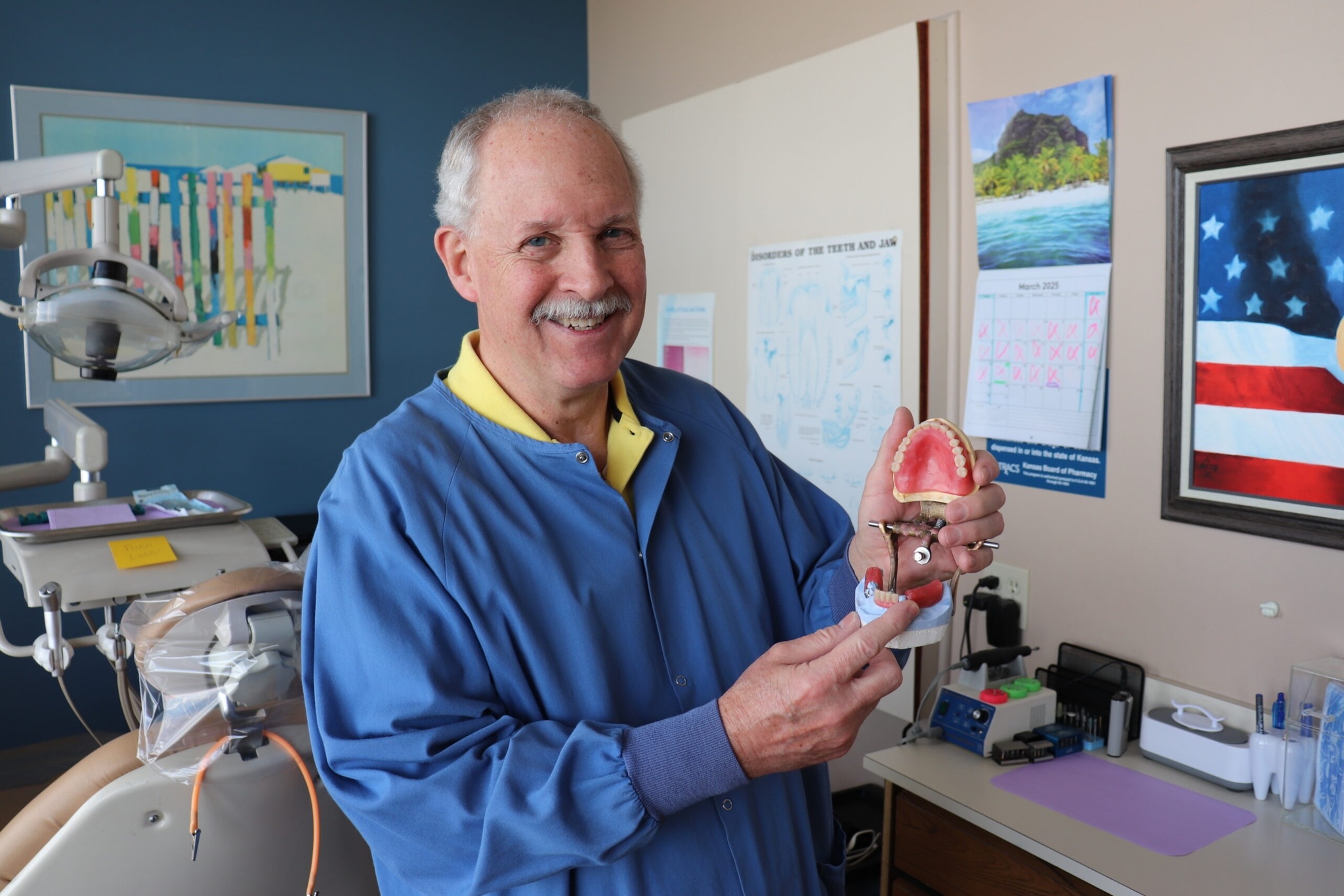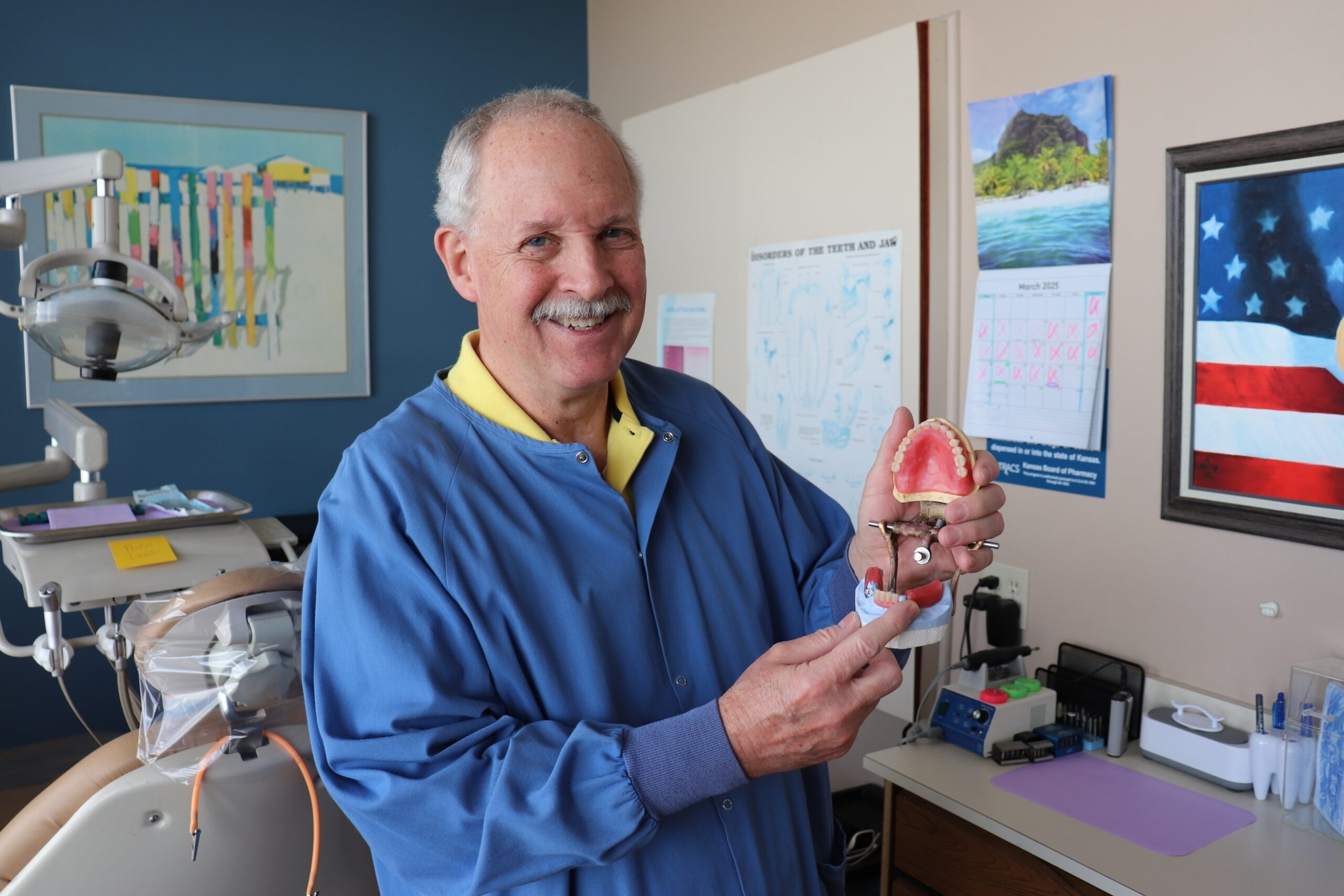

One of the most common questions I hear from patients considering dentures is: “Should I get implants?”
It’s a great question, and there’s no one-size-fits-all answer. I’ve been placing dental implants since 1989 — more than 35 years — and I’ve seen patients find life-changing results with both traditional dentures and implant-supported options.
Let me give you the honest comparison I give every patient who sits across from me in this chair.
Traditional Dentures: The Full Picture
Traditional dentures rest directly on your gum tissue. Upper dentures use suction against the palate to stay in place. Lower dentures rely on fit, muscle control, and often denture adhesive — which is why lower dentures are notoriously more difficult to stabilize.
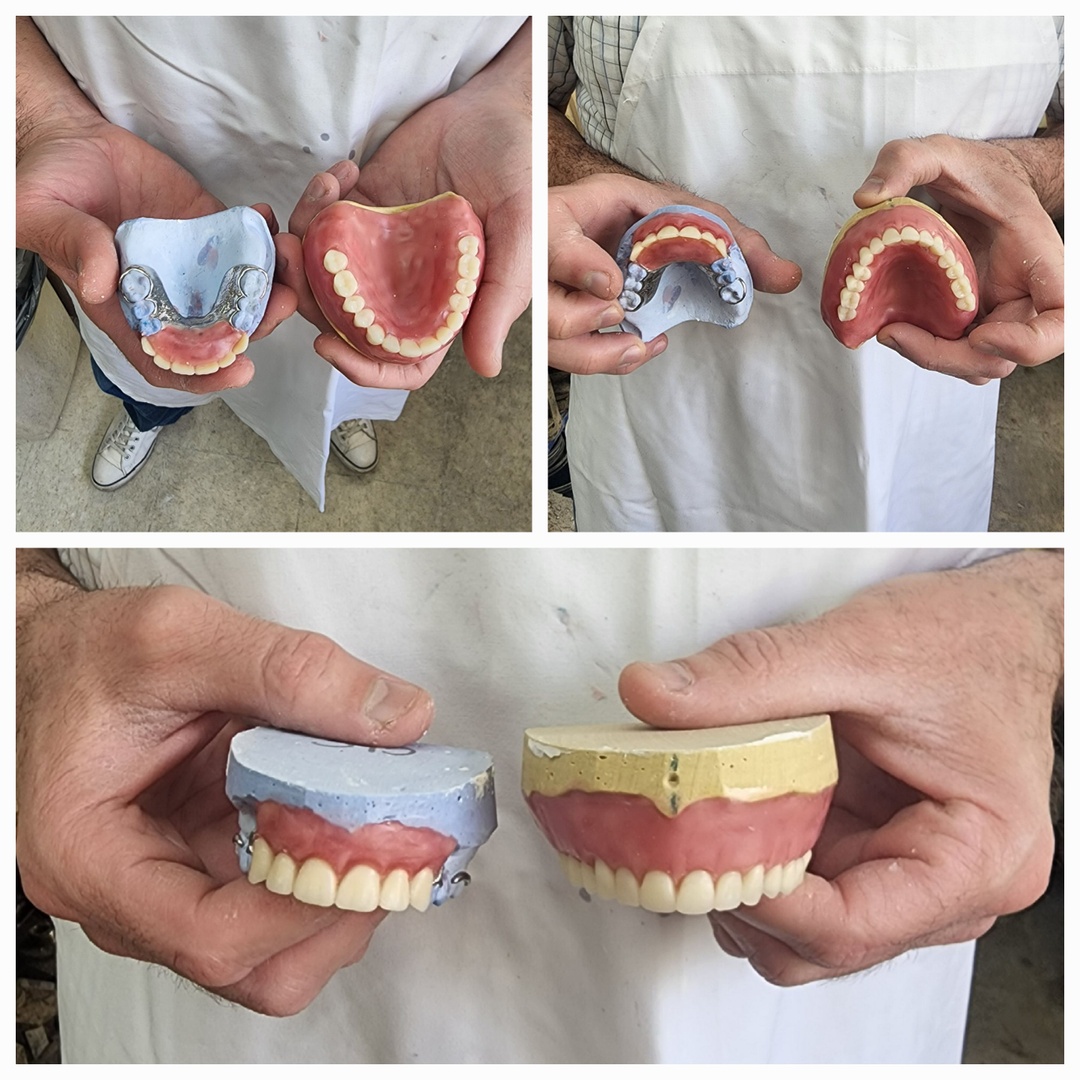
Where traditional dentures excel:
- No surgery required — appropriate for patients who cannot undergo procedures
- Lower upfront cost
- Can be fabricated quickly (same-day, in our case)
- Completely effective and beautiful when properly fitted and maintained
- Excellent solution for most patients
The real challenges patients don’t always hear about:
- Can slip or shift when eating, speaking, or laughing
- Many patients require adhesive for confidence
- Don’t stimulate the jawbone, leading to gradual bone loss over time
- Gum changes require periodic relines to maintain proper fit
- Some foods — steak, corn on the cob, hard fruits — remain genuinely difficult
After 40 years in this field, the feedback I hear most often from traditional denture wearers isn’t about discomfort — it’s about social anxiety. The constant worry that their dentures might shift when they laugh at dinner, or that someone will notice. That’s the part that affects quality of life the most.
For patients who cannot have surgery or for whom implants aren’t appropriate, traditional dentures are an excellent, dignified solution. We fabricate and place them with the same care we bring to everything.
Implant-Supported Dentures: How They Change Everything
Implant-supported dentures are anchored to titanium posts surgically placed in your jawbone. Over a healing period, the implants fuse with the bone through a process called osseointegration — creating a permanent, stable foundation.

There are two main types:
Snap-in overdentures: The denture snaps onto locator attachments connected to the implants. It’s removed for cleaning at night. Dramatically more stable than traditional dentures, with no adhesive needed.
Fixed implant bridges: Permanently screwed onto the implants. Only a dentist can remove them. They look and function most like natural teeth and require the same cleaning routine — brushing, water flossing.
Where implants genuinely change lives:
- Stay firmly in place — zero slipping, zero adhesive
- Restore near-natural chewing force (70–80% vs 20–25% for traditional)
- Allow eating virtually any food with full confidence
- Stimulate the jawbone, preventing the bone loss that changes facial structure
- Long-term durability often makes them more cost-effective over a decade
The Long-Term Value Question
Patients focus on the upfront cost difference and often stop there. But it’s worth doing the real math.
Traditional dentures typically need relining every 1–2 years as gums change shape. They need replacing every 5–7 years as the material wears. Add in the cost of adhesive, additional appointments for sore spots, and the occasional emergency repair — and the costs accumulate significantly.
Implants, with proper care, can last a lifetime. The denture portion still wears, but the titanium posts themselves are permanent. For patients who can afford the upfront investment, the 10-year math often strongly favors implants — and the quality-of-life difference is immediate.

Who Is a Good Candidate for Implants?
I evaluate seven key factors at every implant consultation:
- Adequate bone density and volume (bone grafting can restore this if needed)
- Overall health — well-managed conditions usually aren’t a barrier
- Healthy gum tissue — active gum disease must be treated first
- Non-smoking status (or commitment to reduce significantly)
- Age — no upper limit; I’ve successfully placed implants in patients in their 80s
- Commitment to oral hygiene
- Realistic understanding of the timeline (typically 3–6 months from placement to final restoration)
My Honest Recommendation
If you’re medically able to have implants and can make the investment work financially, implant-supported dentures will very likely give you a better experience — more confidence, better function, and a more natural feel.
If you can’t or don’t want implants, high-quality traditional dentures made in our in-house lab can absolutely give you a beautiful, functional smile that serves you well for years.
The only way to know what’s right for you specifically is a proper evaluation. Call us at (913) 441-1600 or request an appointment. I’ll take X-rays, review your health history, and give you my honest assessment — no pressure, no upselling.